Three crafts, one wedding day. Pick the mix on purpose.
Photographer, videographer, or content creator — what each actually delivers
Collaboration · 9 min read · Updated July 23, 2026
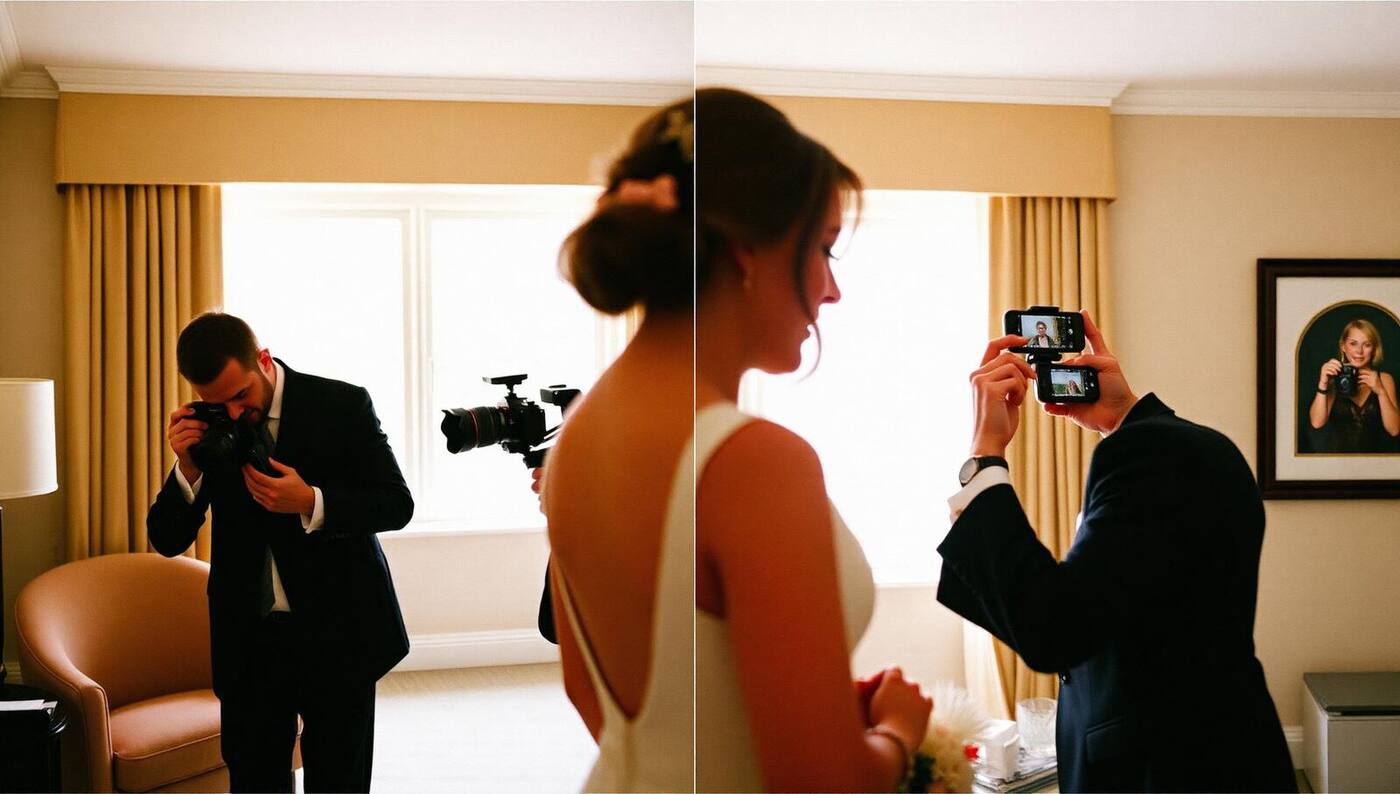
Three cameras on your day, three completely different products. Here is what each one does — and how couples usually mix them.
Almost every couple we meet asks the same question in the first call: do we really need all three? The honest answer is no — but you should choose the mix on purpose, not by accident.
This guide breaks down what each of the three wedding-media crafts actually delivers, what each one costs in Toronto in 2026, and the four combinations we see most often.
If your budget is capped, book a great photographer and a great content creator. That combination — archival stills for the long term and short-form vertical content for the week after — covers what almost every couple actually wants.
The photographer
A wedding photographer delivers between 400 and 800 finished stills, colour-graded and retouched, four to eight weeks after the wedding. The final product is a gallery, usually with a printed album available as an upsell. Photographs are the heirloom deliverable — the thing your children will look at in twenty years.
Photographers work quietly, in horizontal 3:2 format, and their eye is trained on light and geometry. A good one is nearly invisible on the day. In Toronto, expect $3,500–$8,500 for a lead photographer with an assistant covering eight to ten hours.
The videographer
A wedding videographer delivers one polished cinematic film — usually five to fifteen minutes long — plus optional teaser and full-ceremony edits. Delivery takes eight to sixteen weeks. The final product is horizontal 16:9, colour-graded, scored, and cut like a short documentary.
Videographers work with cinema cameras, gimbals, and often a second operator. Their sound recording is as important as their picture; a lav on the officiant is standard. In Toronto, expect $3,500–$12,000 for a two-person videography team covering the full day.
The content creator
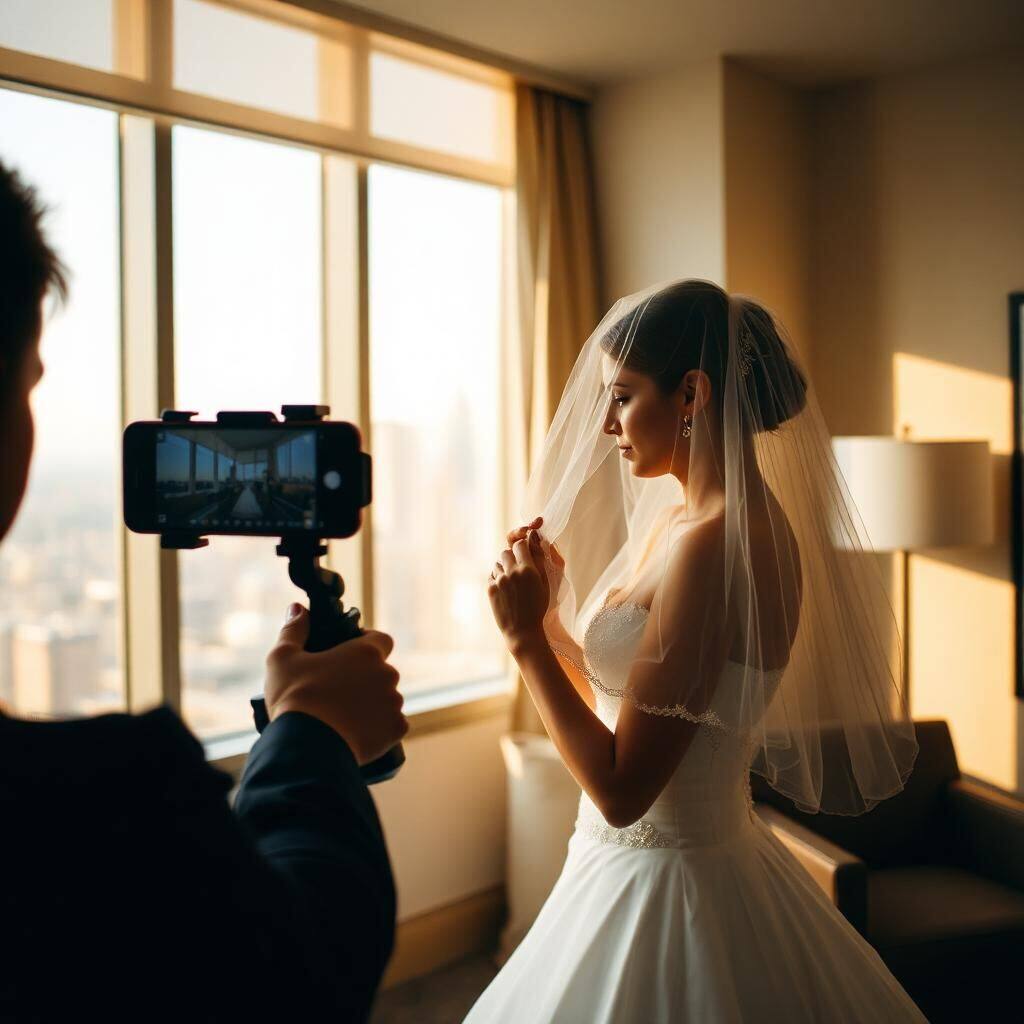
A wedding content creator delivers thirty to sixty short vertical clips — cut for Instagram Reels, TikTok, and stories — inside 24 to 72 hours of the wedding. The footage is shot on a phone (usually an iPhone 15 Pro or newer) on a compact gimbal, in the same 9:16 format the platforms serve.
Content creators work fast and close. Their role is closer to a friend with a very good phone than a second photographer. The final product is not archival; it is designed to live on your feed for a week and then live in your camera roll forever. In Toronto, expect $1,500–$5,000 for a full-day creator.
The four combinations we see most often
Photography only. Most affordable. Right for couples who want a beautiful gallery and are indifferent to video. Total: $3,500–$6,000.
Photography + content. The most common modern package, and the one we recommend by default. You get the archival gallery plus same-week social content. Total: $5,000–$9,000.
Photography + videography. The traditional premium package. Right for couples who want a cinematic film to sit alongside the album. Total: $7,000–$18,000.
All three. Right for weddings where content is part of the guest experience — larger weddings, industry weddings, or couples with a public social presence. Total: $9,000–$22,000.
The mistakes we see most often
Hiring one team for all three. Almost never works. The eye required for a still is different from the eye required for a cinematic cut, which is different from the instinct required to shoot a vertical reel. Three specialists beat one generalist every time.
Skipping the content creator and asking the photographer to "grab a few phone videos". This ruins two products at once — the photographer's gallery gets thinner because they were splitting attention, and the phone footage is worse than a real content creator would deliver.
Booking a videographer expecting Instagram content. A cinematic film takes weeks to deliver; it is not what you post the Monday after the wedding. If you want same-week content, add a content creator.
“Three crafts, one wedding day. Pick the mix on purpose.”
Can our photographer just shoot the video too?
Some photographers offer this as a hybrid package. In our experience, both products suffer. The photographer's hands are busy with a different camera during the moments that matter, and the video is usually a slideshow of stills with music over it. If budget is the reason, drop the video and add a content creator instead — you will be much happier with both deliverables.
Do we need a videographer if we are getting a content creator?
No — they solve completely different jobs. A content creator gives you short-form vertical clips for social within days. A videographer gives you one polished long-form horizontal film within months. Couples who want a cinematic keepsake film book both. Couples who want their wedding on their phone book only the content creator.
What is the difference between a content creator and a videographer's teaser?
A videographer's teaser is a 60-90 second cinematic edit, colour-graded and scored, delivered in one to three weeks — one polished piece. A content creator's delivery is thirty-plus short vertical clips shot on a phone, cut for platform algorithms, delivered inside 24-72 hours. Different length, different format, different turnaround, different purpose.
Which one should we book first?
The photographer, always. Photographers book the fastest — the best ones fill their calendar 12-18 months out. Videographers next, then content creators. Content creators (including us) can usually accept work inside the 4-6 month window when the other two vendors are already locked.
Continue reading
City Edition · Toronto
Toronto

City Edition · Muskoka & cottage country
Muskoka
Venue Edition · Yorkville, Toronto
Park Hyatt Toronto
Venue Edition · Midtown, Toronto
Casa Loma

Planning Guide
How much does a wedding content creator cost in Toronto?
Planning Guide
How to hire a wedding content creator in Toronto
Planning Guide
Designing a content-friendly wedding day
Want this kind of thinking on your wedding?
If you would like the WeddingStory team in the room from the first planning conversation, we would be glad to start one.